


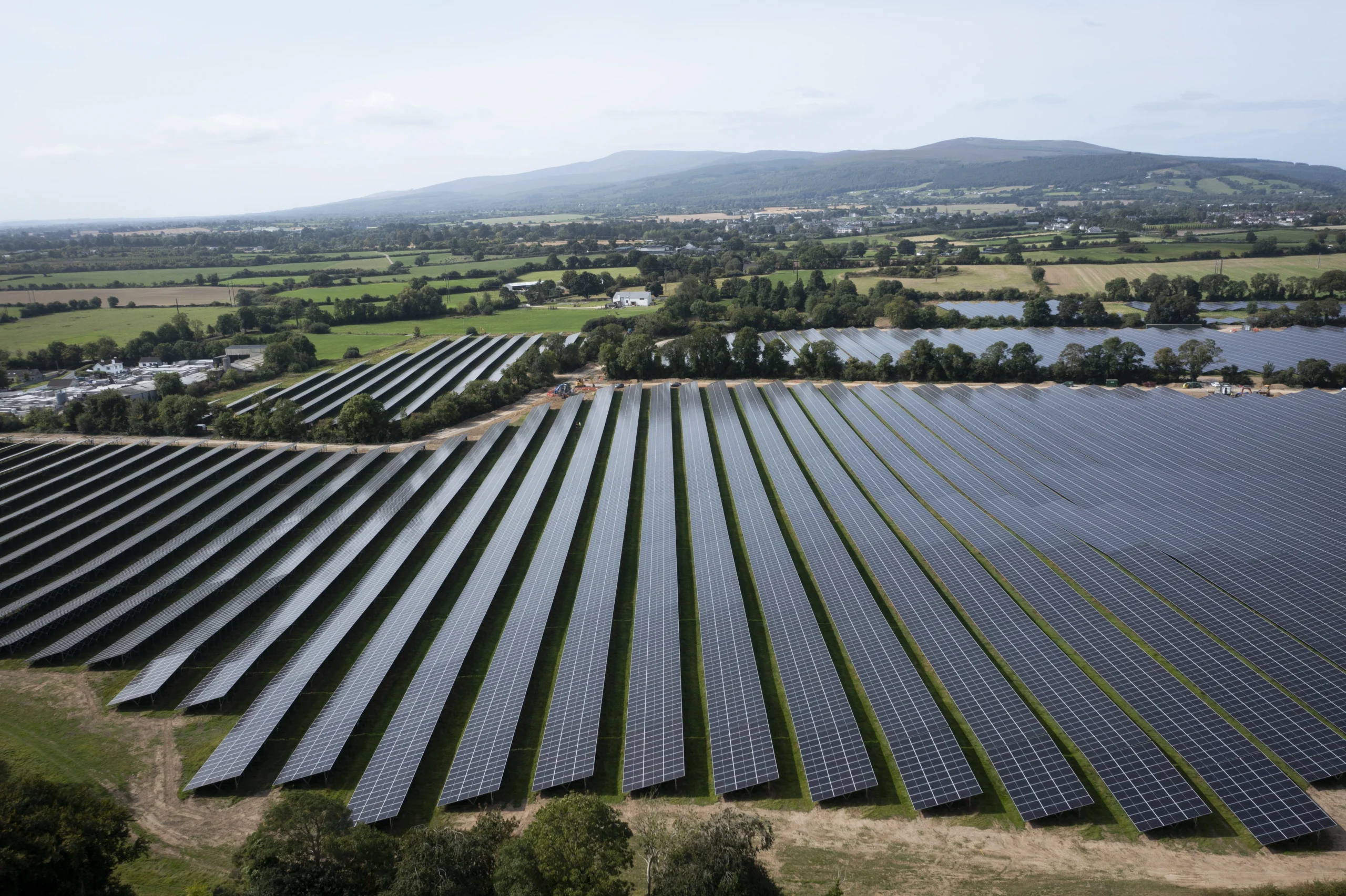
The infrastructure of the next decade will need to be cleaner, more efficient and more resilient, creating opportunities for solutions spanning lower-carbon materials, intelligent energy systems, alternative fuels and carbon management. The scale of investment ahead is significant, with McKinsey estimating that $106tn of infrastructure investment will be required globally by 2040, including $23tn in energy and power.[1]
However, capturing this opportunity will depend on more than developing technologies with strong environmental credentials. Greentech businesses will increasingly need to demonstrate that their solutions can solve practical infrastructure challenges and deliver commercial value at scale.
From innovation to infrastructure deployment
The next phase of Greentech growth is likely to be shaped as much by deployment as innovation. As infrastructure owners work to reduce emissions while managing pressures around cost, productivity and resilience, solutions will need to solve environmental and operational challenges together.
A lower-carbon construction material still needs to meet the technical and commercial requirements of the project in which it will be used. An intelligent energy system needs to integrate with existing assets while delivering measurable operational benefits. Solutions that combine sustainability with better economics, performance or resilience will be better positioned for wider adoption.
UK investment priorities are increasingly reflecting this shift. UKRI’s new five-year strategy puts greater emphasis on helping innovative companies start, scale and stay in the UK, backed by a further £5.1bn of investment.[2] Its latest plans also include £59m for a Materials Innovation Programme intended to accelerate the adoption of advanced materials across UK industry.[3]
Despite this, greater investment in innovation does not remove one of the biggest barriers to scale: turning a technically proven product into something infrastructure customers can confidently adopt.
The deployment gap
One of the biggest challenges facing Greentech businesses is not innovation, but adoption.
Most infrastructure organisations are responsible for operating critical assets with long design lives, strict regulatory requirements and significant operational risk. Introducing new solutions into those environments requires more than a compelling sustainability proposition. Decision-makers need confidence that solutions can perform consistently, integrate with existing systems and deliver measurable economic as well as environmental benefits.
As a result, many Greentech businesses find themselves caught between technical validation and commercial deployment. Products may have proven their effectiveness in controlled environments but still lack the operational track record required to support wider adoption across infrastructure networks. Bridging this gap remains one of the most significant barriers to scale.
Making the commercial case
Real-world deployment can help close that gap, giving businesses an opportunity to demonstrate performance and commercial value while building credible proof points for future customers.
That matters in a sector characterised by long procurement cycles, demanding operational requirements and understandable caution around introducing new technologies into critical assets. The question is not only whether a solution works, but why an infrastructure customer should adopt it.
The right partnerships can help businesses answer that question. Research into energy-transition investment found that 94% of investors prioritise partnerships that allow them to share resources and expertise when navigating financial, regulatory and operational complexity.[4] For early-stage Greentech companies, partnerships can offer more than capital, providing access to operational environments where technologies can be tested, refined and proven at scale.
[2] UK Research and Innovation, 2026. “UKRI Strategy 2026 to 2031”. (Accessed: September 2026).
[3] UK Research and Innovation, 2026. “UKRI Delivery Plan 2026 to 2027”. (Accessed: September 2026).
[4] KPMG, 2024. “Energy transition investment outlook: 2025 and beyond”. (Accessed: September 2026).
Giving Greentech founders a route into infrastructure
Murphy Capital invests in Greentech businesses developing solutions for infrastructure, including advanced green materials, intelligent energy systems, alternative fuels, carbon tools, biodiversity enhancement and circular construction.
Murphy’s own emissions reduction strategy, targeting Net Zero by 2030 and carbon net-positive status by 2050, bears out our commitment to real-world Greentech deployment. Through our ongoing investment in sustainable plant and equipment, transition towards electric vehicles and the Murphy Carbon Calculator emissions tracker, Murphy provides its portfolio companies with a genuine testing ground and a proven example to follow.
Successful deployments can then provide a springboard for wider growth. Murphy’s established client and supply-chain networks can help Greentech businesses build commercial credibility and open routes to new customers and markets, while our industry expertise can support product refinement and the practicalities of scaling.
The next phase of Greentech growth will not be defined by how many new technologies are developed, but by how many are successfully deployed at scale. The businesses that thrive will be those capable of combining innovation with commercial relevance, operational credibility and strong industry partnerships. For founders, the challenge is no longer simply proving that a solution works. It is proving that it can become an indispensable part of tomorrow’s infrastructure.
Further insight into the investment trends shaping UK Infratech is explored in Murphy Capital’s newly published report UK Infratech: From Innovation to Scale.
To learn more about Murphy Capital and how we support Greentech founders to turn innovative technologies into scalable infrastructure solutions, visit our website www.murphy.capital.