


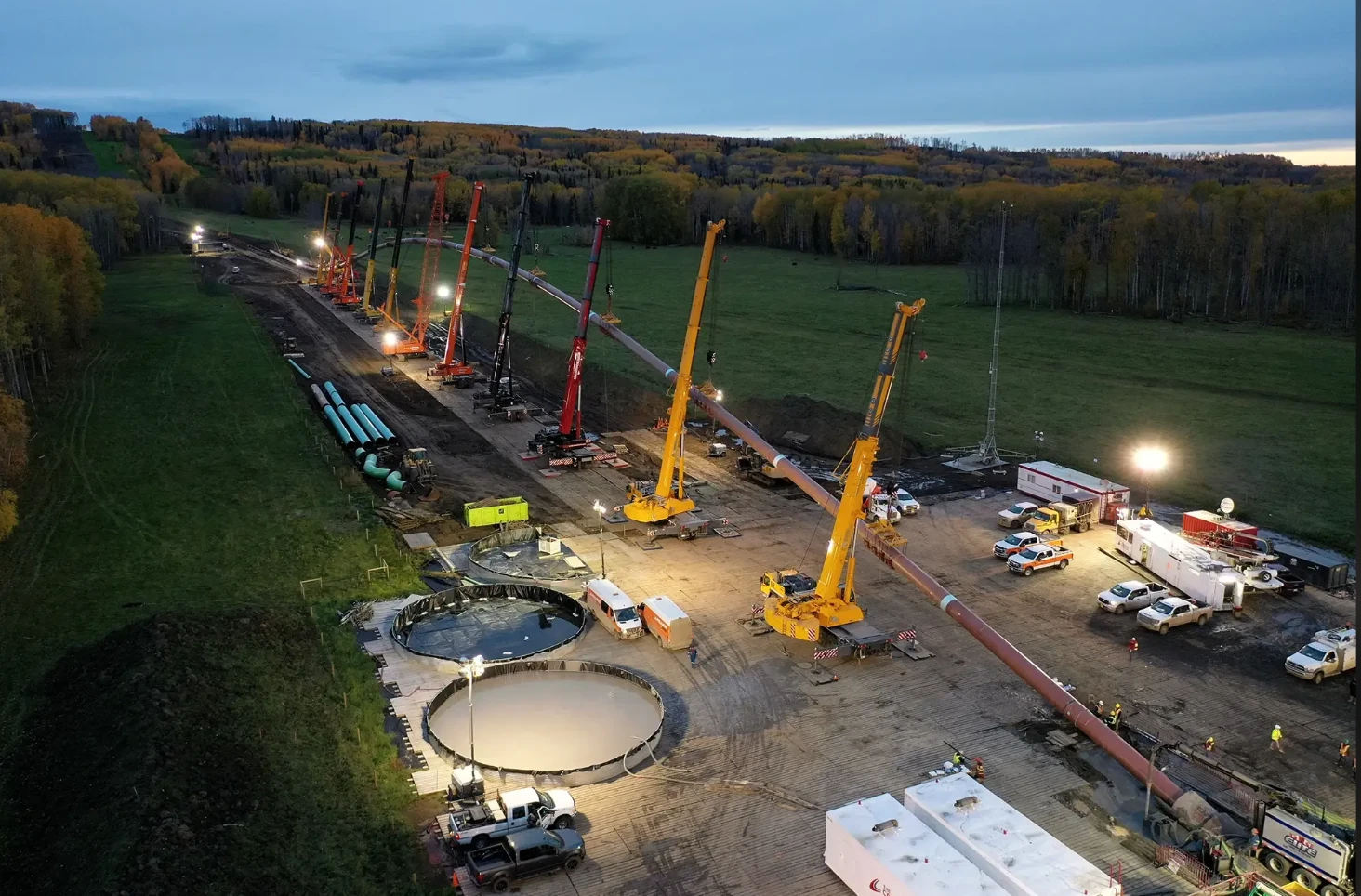
Infrastructure projects that fall behind schedule or exceed budget can often trace the root cause back to the supply chain.
The scale of the challenge is well documented. According to construction consultancy RLB’s 2025 Procurement Trends survey, contractors delivering projects over £30m now rank supply chain robustness among their top three concerns.[1] A further vulnerability is the sourcing of materials: 59.8% of UK construction material imports arrive from the EU,[2] and global trade disruption feeds directly into project costs and schedules in ways that are difficult to manage without better data and visibility.
Across the broader supply chain sector, companies are responding to these pressures. Supply chain management businesses raised £661m in equity investment in 2025, and received over £18.1m in grants during the same period.[3]
A strategic priority
Large infrastructure programmes depend on thousands of suppliers, contractors, assets, and delivery partners operating simultaneously. Relatively small inefficiencies in procurement, logistics, workforce planning, or asset coordination can have significant downstream consequences for cost and schedule.
As investment in energy, water, transportation, and civil engineering is prioritised, technologies that improve visibility, coordination, and procurement decision-making are becoming increasingly important to how infrastructure organisations operate.
The commercial opportunity lies not in digitising existing workflows, but in solving operational problems that cost infrastructure programmes real money; materials arriving late, assets going untracked, procurement processes that are slow and opaque, and workforces that are difficult to coordinate at scale.
Backing supply chain innovators
At Murphy Capital, Supply Chain is one of our three core Infratech investment verticals. We back businesses developing technologies and solutions that address the operational realities of managing complex infrastructure supply chains: procurement productivity and workflow automation, asset tracking and intelligent asset management, logistics coordination and materials visibility, workforce and skills management, specialist products and next-generation materials, and the data platforms that tie delivery systems coordination together.
Many businesses in this space face a common obstacle; even where a solution is proven, getting it adopted within a large infrastructure programme is slow. Procurement cycles are long, delivery environments are complex and fragmented, and live testing opportunities are scarce. As a result, the supply chain technology market remains one of the most strategically important areas of Infratech, despite still facing significant barriers to adoption.
Murphy Capital was established, in part, to change that.
Accelerating the route to market
What sets Murphy Capital apart in the supply chain space is direct access to the environments where these technologies need to operate. Murphy’s global delivery operations provide portfolio companies with something most investors cannot; procurement functions actively seeking solutions, live project environments for real-world testing, established supply chain delivery partnerships, and an £8.2bn order book that creates genuine, near-term commercial opportunities.
Murphy Capital’s value to supply chain businesses goes beyond capital. Portfolio companies can:
- Access Murphy’s procurement teams directly, shortcutting the lengthy vendor qualification processes that typically slow supply chain adoption
- Deploy and validate solutions within live, large-scale infrastructure projects across energy, water, and transportation
- Plug into established supply chain delivery partnerships and logistics networks to accelerate deployment at scale
- Generate real-world performance data to strengthen product development and commercial validation
- Use Murphy as a reference customer to open doors with major infrastructure clients
In a sector defined by long sales cycles and high barriers to adoption, this level of embedded access is a genuine differentiator, enabling founders to accelerate deployment, shorten time-to-revenue, and scale with greater certainty.
Murphy Capital does not simply invest in supply chain technology, we help founders get their solutions working inside live infrastructure operations, generating revenue and building the credibility needed for scalable growth.
[1] RLB, Procurement Trends Survey 2025: Creating a Value Chain, 25 June 2025, https://www.rlbinsights.com/reports/procurement-trends-report-2025/
[2] Department for Business and Trade, Construction Building Materials: Commentary April 2026, 6 May 2026, www.gov.uk/government/statistics/building-materials-and-components-statistics-april-2026
[3] Data from Beauhurst Insights, collected on 29 May 2026.
Building the next generation of infrastructure supply chains
Supply chain innovation is becoming one of the most strategically important areas of Infratech. As programmes grow in scale and complexity, the organisations that find ways to strengthen how they source, coordinate, and manage their supply chains will have a structural advantage in delivering projects on time and on budget.
Murphy Capital is backing the businesses building that future.
Further insight into the supply chain technologies, investment activity, and innovation trends reshaping infrastructure delivery will be explored in Murphy Capital’s forthcoming report with Beauhurst Insights.